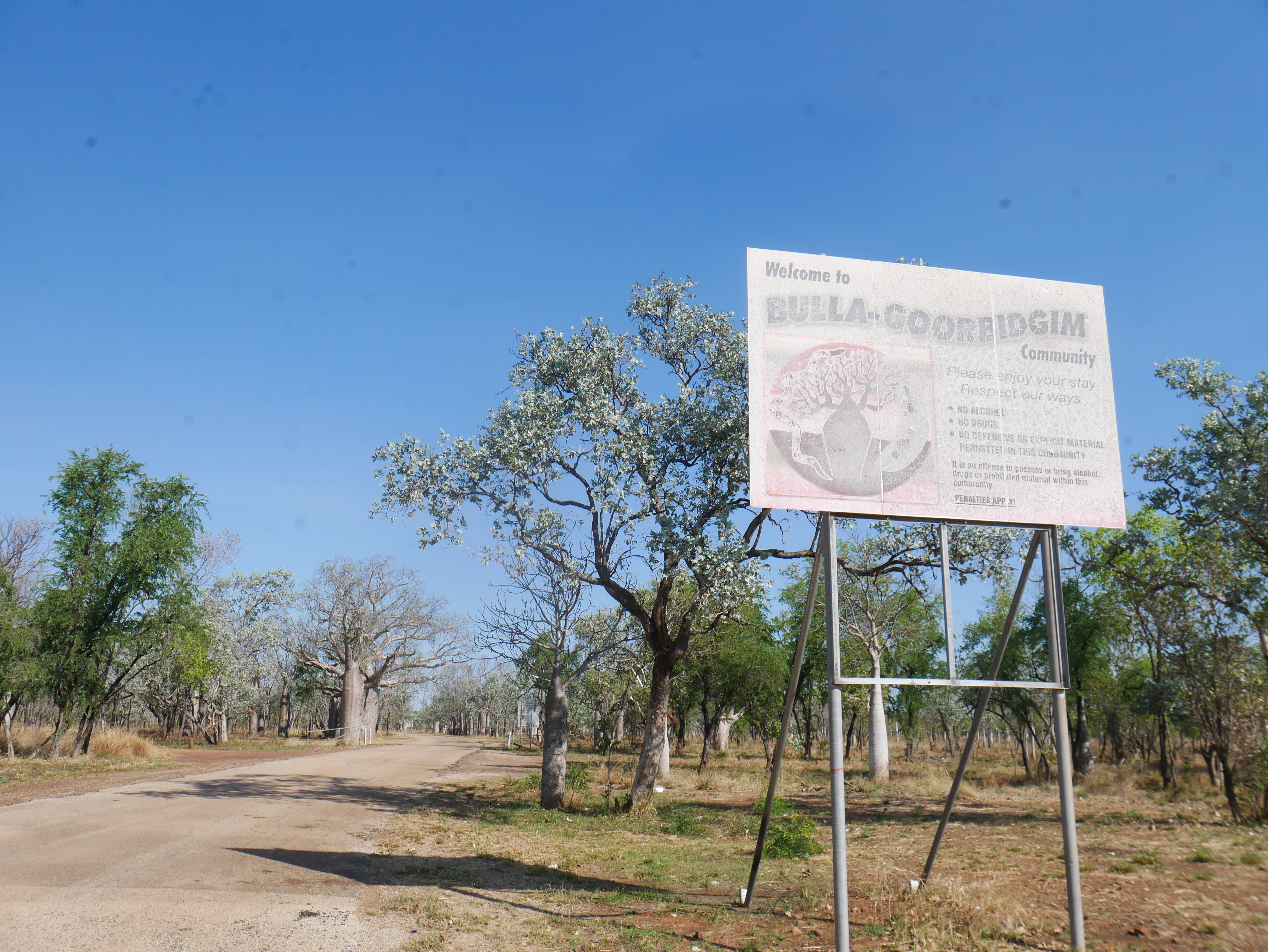
The small community of Bulla (Gudabijin) in the north west of the Northern Territory has a problem with its water supply. The problem is Barium, an earth metal which has been detected in the drinking water supply at up to ten times the safe limit. The issue has been ongoing and known for many years. The responsible authority the Power and Water Corporation appears unable to resolve the issue.
The levels of Barium in drinking water at Bulla are the highest in the country and according to the Australian Drinking Water Map, Bulla is the only location in the country that has breached the Australian Drinking Water Guidelines for Barium. The latest published levels recorded over 2023-2024 appear to be getting higher.
In April 2023 Friends of the Earth published a report concerned about drinking water in a number of locations across the Northern Territory. It appears that little has changed since then at Bulla. In that report FoE wrote: "The small community of Gudabijin/Bulla in the north west of the Northern Territory rated poorest quality of water due mainly to high levels of Barium between the years 2007-2022. Barium levels were up to 5 times higher than the Australian Drinking Water Guideline between 2016-2020. High levels of barium can cause changes in heart rhythm or paralysis in humans. Short period exposures may cause vomiting, abdominal cramps, diarrhea, difficulties in breathing, increased or decreased blood pressure, numbness around the face, and muscle weakness."
The Water Quality Association state that potential health effects of barium include: Those barium compounds that dissolve well in water may cause harmful health effects in people. Ingesting high levels of soluble barium compounds over the short term has resulted in difficulties in breathing, increased blood pressure, changes in heart rhythm, stomach irritation, brain swelling, muscle weakness, and damage to the liver, kidney, heart, and spleen.
Bulla has a population of about 80 people. The local school has between 10-20 students. Population numbers in Bulla can fluctuate.
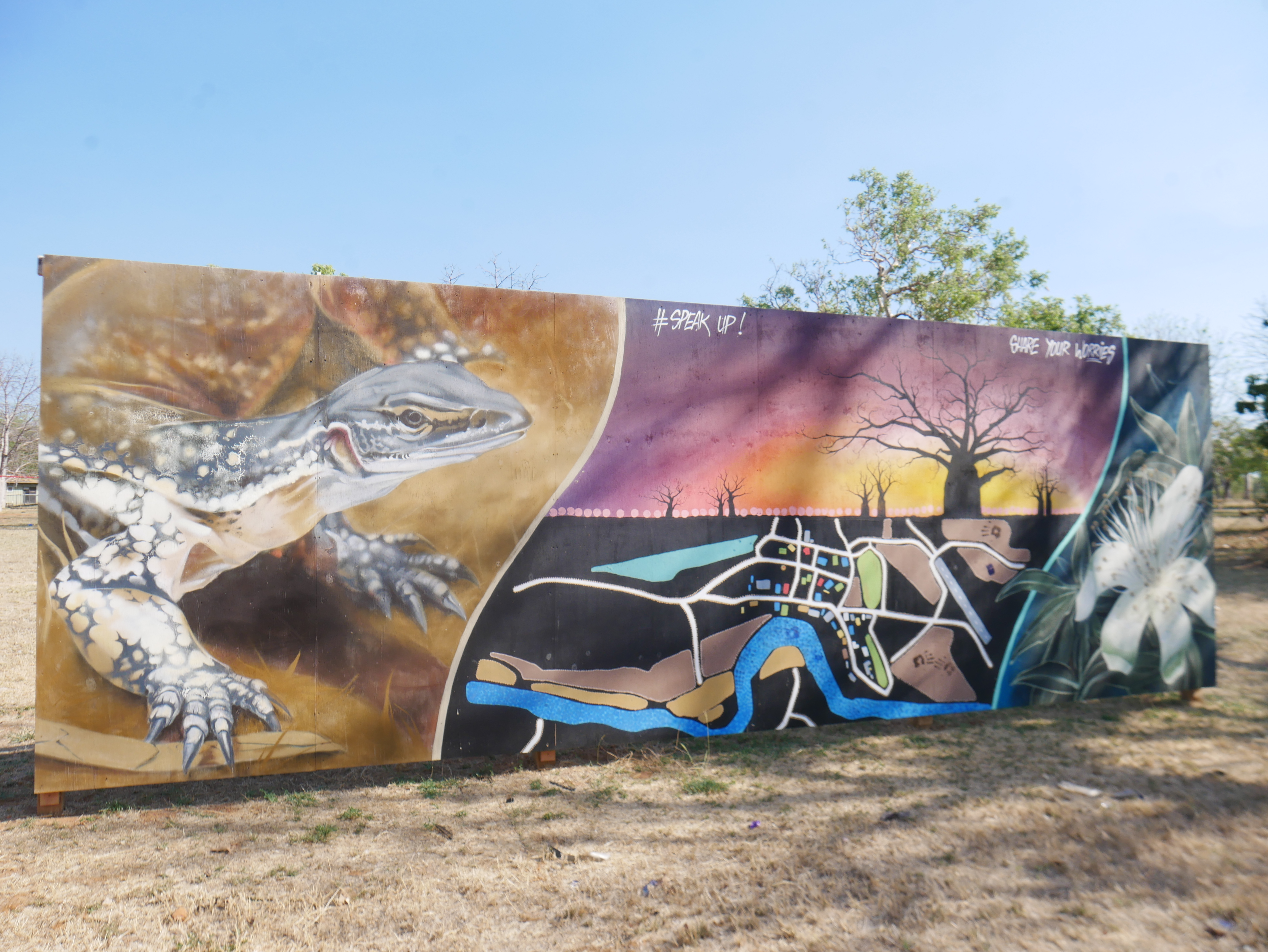
Mural in Bulla
In FoE's 2023 report FoE was hopeful that the situation at Bulla was slowly being rectified: "Gudabijin/Bulla (with a combination of Fluoride, Barium and Manganese) was exposed to drinking water at ~three times higher than the Australian Drinking Water Guidelines for almost the past 15 years.... Drinking Water Supply: East Baines River + Groundwater (Katherine Region). The East Baines River has elevated levels of iron and manganese. The groundwater has high levels of Barium. A new treatment of disinfection process has allowed reduced levels of groundwater being used. Barium levels in the water supply peaked to around 5 times the ADWG between 2016-20, but appear to have dropped back to the ADWG over 2020/22. These are lowest barium levels since 2007/08. High levels of barium can cause changes in heart rhythm or paralysis in humans. Short period exposure may experience vomiting, abdominal cramps, diarrhea, difficulties in breathing, increased or decreased blood pressure, numbness around the face, and muscle weakness."
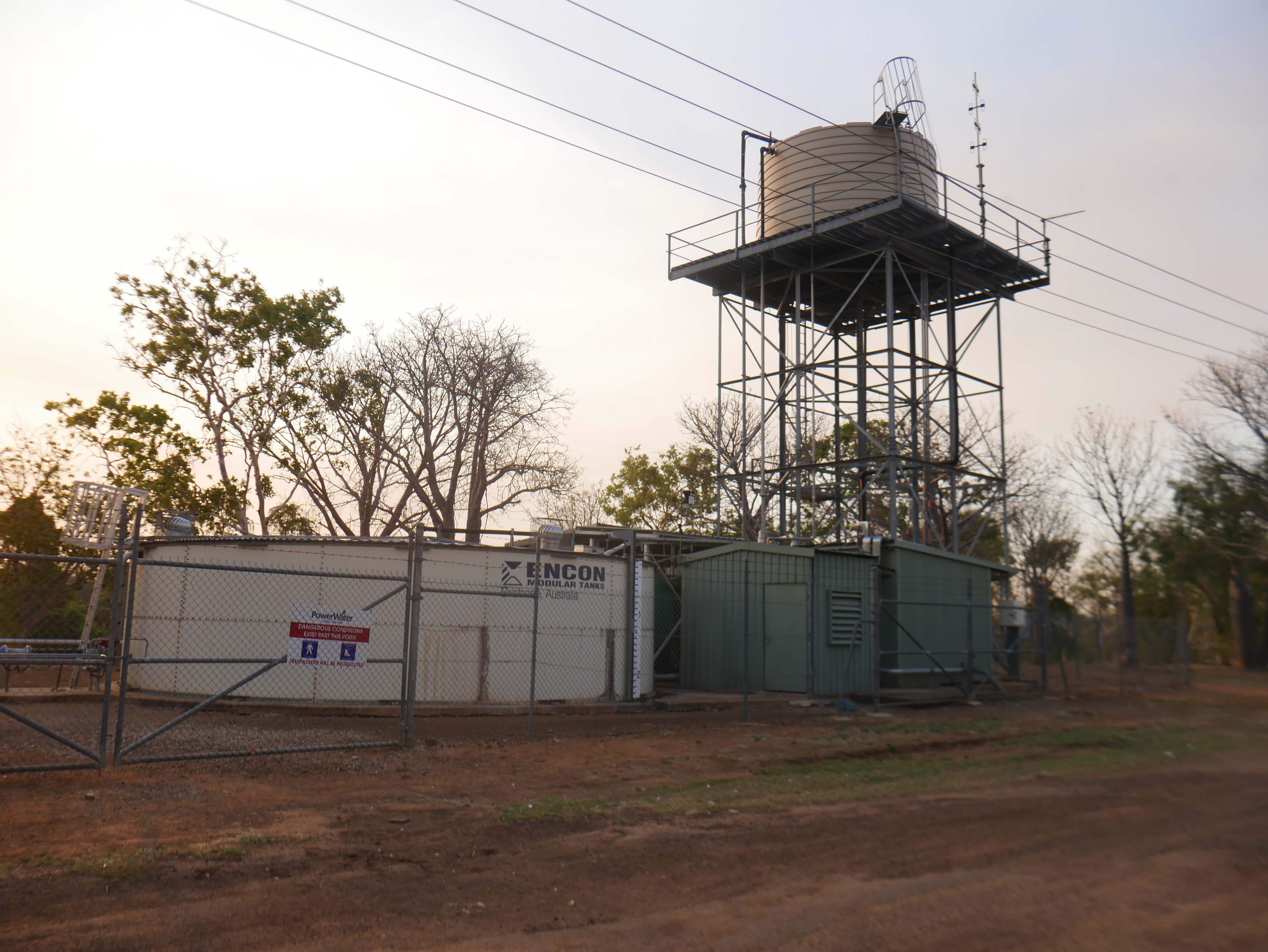
Bulla water treatment plant
Since April 2023 Power and Water Corporation have produced two Annual Drinking Water Quality Reports in 2023 and 2024. In the 2023 report Power and Water Corporation acknowledge that health parameters were not met at Bulla (Barium 20mg/L) p60. Barium has a health guideline of 2mg/L under the Australian Drinking Water Guidelines. On page 77 of their 2023 report Power and Water wrote: "Barium occurs naturally in the ground and through the dissolution of minerals and ores in the water. Barium concentrations in drinking water are recommended by the ADWG to not exceed 2mg/L. Testing showed that 71 of 72 communities were below this guideline. For this reporting period, barium levels in Bulla ranged between 0.2mg/L and 20mg/L (average 10mg/L). Because of the naturally high levels of barium in the groundwater, samples are being collected on a monthly basis to monitor levels in the water supply. Under normal operations, when surface water treatment is possible, blending of groundwater with surface water maintains barium levels below the ADWG. This minimises exposure to barium through drinking water. However, surface water cannot be used in situations where the surface water treatment system is offline. This can occur due to flooding in the river or technical issues with the treatment system."
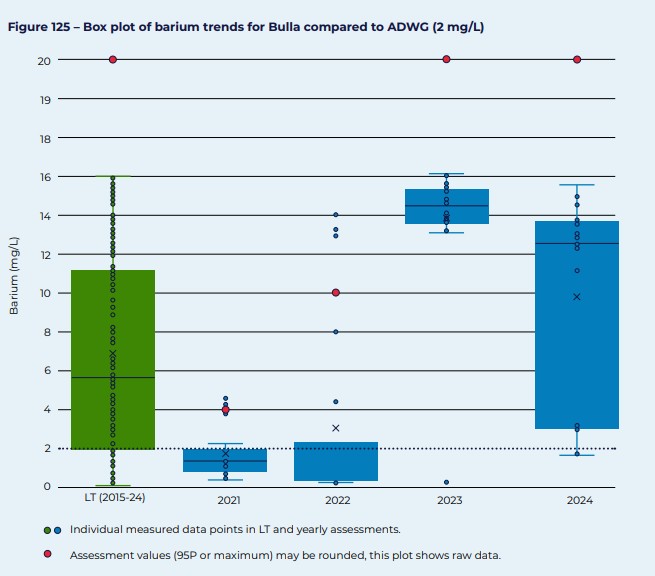
Source: Power and Water Annual Drinking Water Quality Report 2024 p114. Note that Barium levels over 2023/2024 remained exceedingly high. Approximately 14% of Barium detections at Bulla between 2015-2024 have come in under the guideline level. Only one sample per year in 2022, 2023 and 2024 have come in under the guideline level.
In the 2024 Annual Drinking Water Quality Report Power and Water Corporation wrote: "Twelve of the 72 remote communities have either an extreme or very high inherent risk of water source failure. Demand management has helped to prevent all of these remote communities from experiencing water source failure over the past 12 months... Health parameters with ADWG ‘not met’ include: Bulla (barium 20 mg/L) p74... Bulla was the only community to exceed ADWG (2 mg/L) for barium. Bulla returned a maximum concentration of 16 mg/L (rounded to 20 mg/L for the assessment) p91... In the wet season, high turbidity in the East Baines river impacts surface water treatment requiring sourcing supply from a single groundwater bore with naturally occurring levels of Barium >ADWG. Under normal operating conditions (i.e. dry season), surface water is prioritised and blended with groundwater to reduce Barium exposure to customers in Bulla." p109
It should also be noted that the pump from the East Baines River can also be stopped if water levels are too low.
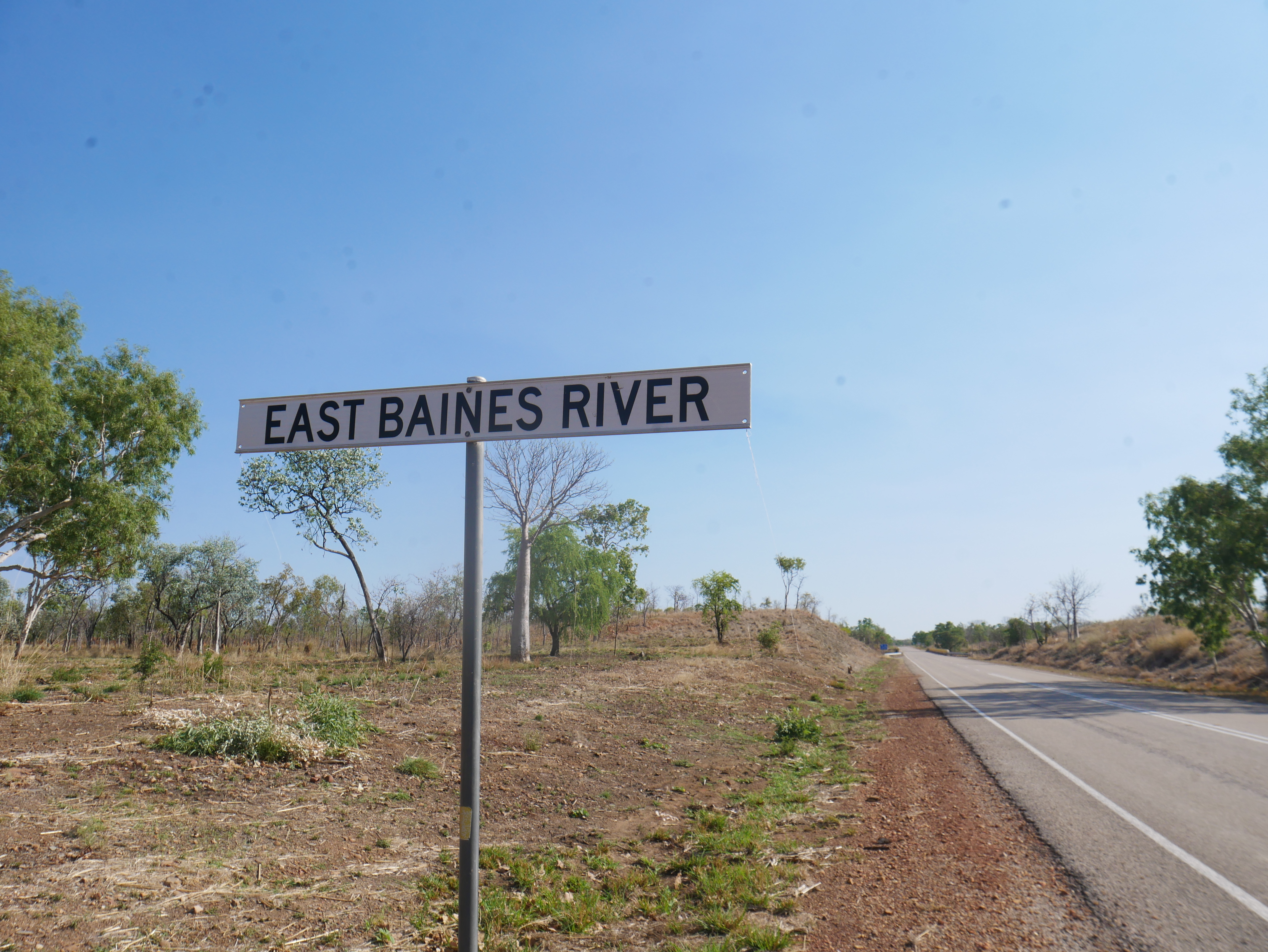
East Baines river up ahead
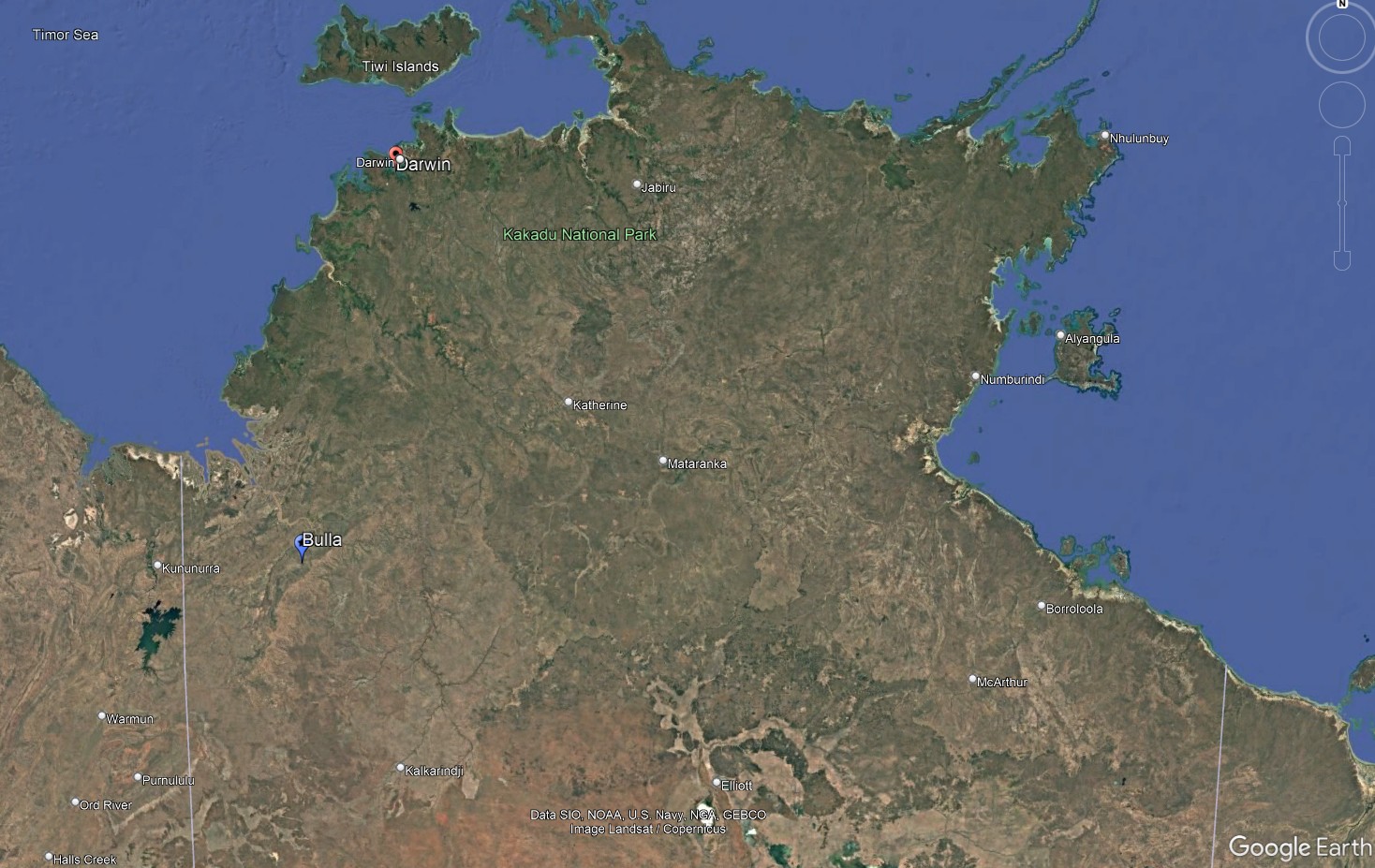
Bulla is located 140km east of Kununurra and 370km south of Darwin
The Water Quality Association state that treatment methods effective for lessening the impacts of Barium in drinking water include;
| Residential | Cation Exchange |
| Residential Point of Entry | Electrochemical deionization |
| Residential Point of Use | Reverse Osmosis, Distillation |
| Municipal | Lime Softening, Cation Exchange, Reverse Osmosis |
Perhaps the easiest solution would be to provide reverse osmosis water filters for the community and school at Bulla.
Part of the dilemma facing smaller communities such as Bulla is that Government resources for improving drinking water quality are limited and there will be many communities, with larger populations that will receive help before smaller ones. For instance in January 2025 the Federal Government announced $34 million for better water security/quality for ten communities in the Northern Territory. Average populations sizes for these communities was ~350 people. Recent legal cases in the Territory, eg residents in Laramba facing uranium contamination, have proved that the Northern Territory Government is responsible for safe drinking water in the NT. The residents at Bulla therefore will be legally justified that the NT Government needs to seriously address the issue facing a community with the highest levels of Barium in drinking water in the country and the highest levels of toxic substances in drinking water in the Northern Territory.
If you could email The Honorable Steven Edgington (Minister for Health) and ask if the Northern Territory Government could resolve this ongoing issue at Bulla: [email protected]
Also email The Honorable Joshua (Josh) Burgoyne (Minister for Water Resources) and ask him if the Northern Territory Government can resolve this issue at Bulla: [email protected]