What actually is in your drinking water? The answer to this question will depend entirely on your location. Are you on mains water or do you get your water from drinking water tanks? Are you living in an urban area or are you in a rural location? Do you get your water from surface flow, bore water or are you reliant on rain water?
Is your water supply catchment area covered in native forest, or is it covered in farmland? What is the geology of the area where your drinking water is sourced from? What type of water treatment is used by your water authority? What season did the water testing occur?
Who is responsible for testing your drinking water and how often do they test it? If the water is tested what does the water authority actually test for? If you are living in Queensland or NSW in a rural environment, the water authority will most likely be the local shire. Have they got the resources to adequately test your drinking water? If you are living in a very isolated location there will probably be no testing and no treatment of your water. Do you have a home water treatment system such as filters?
In light of these questions, FoE decided to look at three locations in urban environments South Australia on one particular day of the year. The water was tested and provided by SA Water. The locations selected were Adelaide, Craigmore and Sellicks Beach. It should be pointed out that it is impossible for water authorities to test for water in every location that they supply, so instead, sampling locations usually occur at one or a couple of locations in a suburb or town, with testing occurring just at those locations, unless there is an emergency or a serious complaint.
Inner Adelaide sources water from the Central Metropolitan Area (Happy Valley Water Treatment Plant (WTP)), Craigmore from the Northern Metropolitan Area (Anstey Hill, Happy Valley, Barossa, Little Para WTP's) and Sellicks Beach from Myponga Metropolitan (Myponga WTP).
There may also be less frequent testing for substances such as pesticides or PFAS* chemicals in raw water supplies prior to treatment. If these substances are detected above drinking water guidelines, then treated water may also be tested. (*Recent independent testing - published in 2026, has revealed PFOS and other PFAS chemicals in inner city Adelaide drinking water at ~14% of guideline levels. PFAS chemicals however have not been detected in raw water tests by SA Water, indicating that the PFAS may be coming from within the reticulated system itself - post treatment).
If you found this blog informative consider donating to our water and toxics research here
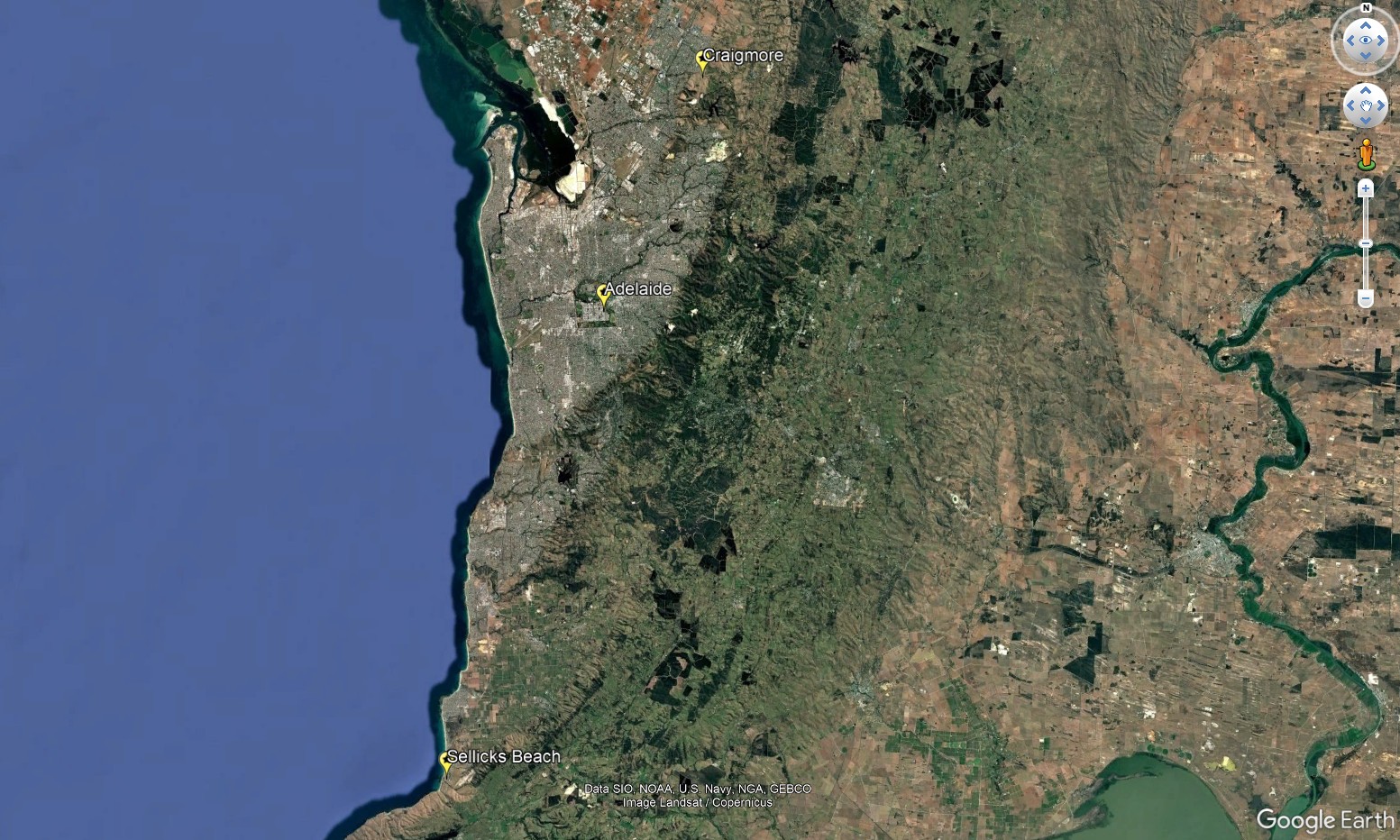
The three locations in and near to the city of Adelaide in South Australia
The three locations were chosen randomly to highlight how slight changes in location can impact on drinking water quality. The Adelaide testing was conducted one day by a water authority in December 2023, Craigmore testing one day in January 2024 and Sellicks Beach testing one day in September 2023.
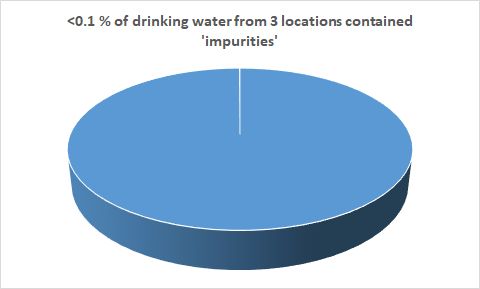
It is important to note that approximately <0.1% (represented by the white line in the graph) of drinking water is not H2O. The 0.1% is the amount that contains a variety of substances including Total Dissolved Solids, Metals, Chlorine, Disinfection byproducts and other 'impurities'. The impurities are usually measured in parts per million or parts per billion. For the three locations selected for this blog, about 50 impurities were detected during testing. It is important to note that the results of the tests vary during different tests undertaken during the year. Note no testing for PFAS chemicals.
The scale for the following table (except for colour, pH, turbidity) is μg/L or parts per billion.
| Chemical | Type | Adelaide | Craigmore | Sellicks Beach | Drinking Water Guideline Health | Drinking Water Guideline Aesthetic |
| 111trichloropropan-2-one | Disinfection Byproduct/Chlorinated organic compound | 3.6 | 4.1 | WHO 2000 | ||
| Aluminium Total | Metal/Coagulant | 39 | 33 | 53 | 100 | |
| Ammonia | Inorganic compound/chloramine disinfection | 200 | 500 | |||
| Arsenic | Metalloid | 0.36 | 0.49 | 0.44 | 10 | |
| Barium | Metalloid | 33.4 | 46.1 | 2,000 | ||
| Boron Soluble | Trace Metalloid Element | 28 | 59 | 32 | 4,000 | |
| Bromoacetic Acid | Disinfection Byproduct/Haloacetic Acid | 2 | ||||
| Bromochloroacetic Acid | Disinfection Byproduct/Haloacetic Acid | 17 | 12 | |||
| Bromochloroacetonitrile | Disinfection Byproduct/Halogenated nitrile | 5.1 | 5.3 | |||
| Bromodichloromethane | Disinfection Byproduct/Trihalomethane | 48 | 79 | WHO 60 | ||
| Bromoform | Disinfection Byproduct/Trihalomethane | 14 | 14 | WHO 100 | ||
| (Calcium Carbonate) Hardness | Inorganic Compound | 125,000 | 128,000 | 110,000 | 200,000 | |
| Chloral Hydrate | Disinfection Byproduct | 7 | 10 | 100 | ||
| Chloride | Mineral | 100,000 | 116,000 | 127,000 | 250,000 | |
| Chlorine Total | Chemical Element | 1,000 | 100 | 2,600 | 5,000 | |
| Chloroform | Disinfection Byproduct/Trihalomethane | 26 | 56 | WHO 300 | ||
| Chromium | Metallic Element | 0.2 | 0.4 | 0.3 | 50 (Hexavalent) | |
| Colour | <1 HU | 2 HU | 3 HU | 15 HU | ||
| Copper | Metalloid | 51.5 | 8 | 11.3 | 2,000 | 1,000 |
| Dibromoacetic Acid | Disinfection Byproduct/Haloacetic Acid | 13 | 13 | |||
| Dibromoacetonitrile | Disinfection Byproduct/Halogenated nitrile | 4.5 | 2.8 | WHO 70 | ||
| Dibromochloroacetic Acid | Disinfection Byproduct/Haloacetic Acid | 15 | 19 | WHO 100? | ||
| Dibromochloromethane | Disinfection Byproduct/Trihalomethane | 53 | 70 | WHO 100 | ||
| Dichloroacetic Acid | Disinfection Byproduct/Haloacetic Acid | 12 | 100 | |||
| Dichloroacetonitrile | Disinfection Byproduct/Halogenated nitrile | 2.8 | 5.5 | WHO 20 | ||
| Dissolved Oxygen | Amount of oxygen present in water | 7,790 | 7,000 | 5,800 | 85% | |
| Dissolved Organic Carbon | Organic matter in water | 7,580 | ||||
| Fluoride | Mineral | 940 | 870 | <100 | 1,500 | |
| E.coli | Bacteria | 0 | 0 | 0 | 0 | |
| Iodide | Trace Element | 20 | 500 | |||
| Iron Total | Chemical Element | 4.4 | 7.4 | 4.1 | 300 | |
| Lead | Metalloid | 0.4 | 0.1 | 5 | ||
| Manganese Total | Trace Mineral | 1 | 2.1 | 1.2 | 500 | 100 |
| Molybdenum | Metalloid | 0.3 | 0.3 | 0.3 | 50 | |
| Monochloramine | Disinfection Byproduct/Inorganic compound | 2,600 | 5,000 | |||
| NDMA | Disinfection Byproduct/Volatile organic compound | 0.01 | 0.1 | |||
| Nickel | Metalloid | 0.8 | 0.9 | 0.6 | 20 | |
| Nitrate + Nitrite as NO3 | Chemical compounds consisting of nitrogen + oxygen | 670 | 80 | 1,300 | 50,000 (babies) | |
| pH | "Potential of Hydrogen"/Acidity | 7.1 | 7.2 | 8.6 | 6.5-8.5 | |
| Selenium | Trace Mineral | 0.2 | 0.1 | 4 | ||
| Silica Reactive | Mineralloid | 2,720 | 3,470 | 80,000 | ||
| Sodium | Alkali metalloid | 56,800 | 72,000 | 85,700 | 20,000 (cardiovascular) | 180,000 |
| Sulphate | Salt compound containing sulphur and oxygen | 55,800 | 47,100 | 63,600 | 250,000 | |
| Temperature | 21.3 | 27 | 17 | |||
| Total Dissolved Solids | Organic Salts and Organic Matter | 314,000 | 375,000 | 389,000 | 600,000 | |
| Total Haloacetic Acids (HAA9) | Disinfection Byproducts | 82 | 96 | |||
| Tribromoacetic acid | Disinfection Byproduct/Haloacetic Acid | 4 | 13 | |||
| Trichloroacetic Acid | Disinfection Byproduct/Haloacetic Acid | 6 | 19 | 100 | ||
| Trihalomethanes | Disinfection Byproduct/Trihalomethane | 141 | 219 | 250 | ||
| Turbidity | <0.1 NTU | 0.1 NTU | <0.1 NTU | 5 NTU | ||
| Zinc | Mineral | 2.7 | 2.7 | 1.5 | 3,000 |
Whilst the list of substances can be overwhelming it is important to note that almost all of the detections came in below the Australian Drinking Water Guidelines. It is also worth noting that in the guidelines there are health related guidelines and aesthetic guidelines. Whilst a glass of tap water may appear to be dirty or discoloured this does not necessarily mean that that it will be in breach of health guidelines. Likewise, a glass of clear looking tap water may actually be in breach of health guidelines.
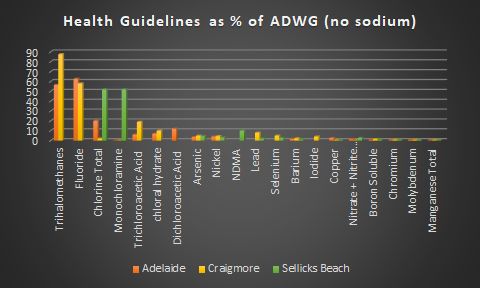
The graph shows all the detections at the three locations and shows the substances in relation to percentages of the health aspects of the Australian Drinking Water Guidelines (ADWG's). In terms of health guidelines, the most 'risky' substance on the days of testing were Trihalomethanes. The detection at Craigmore was almost 88% of the Australian drinking water guideline, with the detection at Adelaide about 50% of the Australian drinking water guideline. No testing occurred at Sellicks Beach for Trihalomethanes as their drinking water is chloraminated, where ammonia is added to the chlorine during disinfection, reducing disinfection byproducts (but creating others such as NDMA). Choramination creates Monochloramines, which when tested were 50% of the Australian drinking water guideline at Sellicks Beach.
The ADWG's are based on a lifetime exposure, meaning that exposure to a substance above guidelines for lengthy periods of time would most likely result in potential health issues. Short term or acute breaches to the drinking water guidelines are not generally considered a health issue, unless they are related to micro-organisms. However it is likely that some people in a population will be more sensitive to some substances than others, so the guidelines may not be the same for everyone. Test results are usually calculated over an annual period. Short term levels above guideline levels will be 'watered down' somewhat by lower detections throughout the year - working to an average annual level. If guidelines are breached over longer periods, water treatment processes may have to change and in serious instances water treatment plants may have to be upgraded.
Trihalomethanes are created when chlorine used during water treatment reacts with organic material in the source water. Chlorine is widely used as a disinfectant against microorganisms, which if found in the water can lead to widespread gastrointestinal problems and in the worst case scenario hospitalisation and even death. For water authorities the number one concern guarding against microbiological contamination of the water system. A byproduct of such vigilance are disinfection byproducts.
Trihalomethanes consist of 4 chemicals: Bromodichloromethane, Bromoform, Chloroform and Dibromochloromethane. The World Health Organisation (WHO) grant individual guidelines for these chemicals (60μg/L for Bromodichloromethane, 100μg/L for Bromoform, 100μg/L for Dibromochloromethane and 300μg/L for Chloroform), whereas the ADWG's combine all four chemicals into one Total amount called Total Trihalomethanes. The Australian guideline is 250μg/L. In the United States this guideline is 80μg/L. Both Adelaide and Craigmore would exceed the US THM guideline with Craigmore breaching the WHO guideline for Bromodichloromethane. THM's have been linked to some cancers. Trihalomethanes also tend to rise during hotter temperatures making summer the season when these substances can be at their highest. Do some people have more genetic susceptibility to THM's than others, making guideline levels unsafe for them?
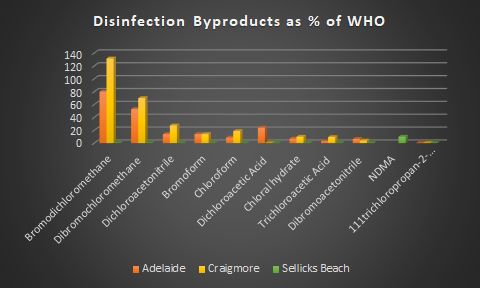
Eleven disinfection by products have guideline levels under WHO (eight of these have guidelines under the ADWG's). Clearly the standouts are the THM's Bromodichloromethane and Dibromochloromethane. What is the synergistic effect of all these chemicals reacting with each other?
It is interesting to note that the top seven substances in terms of health concerns of all substances tested for are all related to water treatment, not what is in the source water. Fluoride is added to the water supply at water treatment plants under the guise of protecting teeth from decay. This is the only substance added at water treatment plants in the top seven substances that is not related to chlorine disinfection.
The other interesting point to make is in relation to sodium. Under the ADWG's, sodium is only granted an aesthetic guideline of 180mg/L (180,000μg/L). However the guidelines also state: No health-based guideline value is proposed for sodium. Medical practitioners treating people with severe hypertension or congestive heart failure should be aware if the sodium concentration in the patient’s drinking water exceeds 20 mg/L.
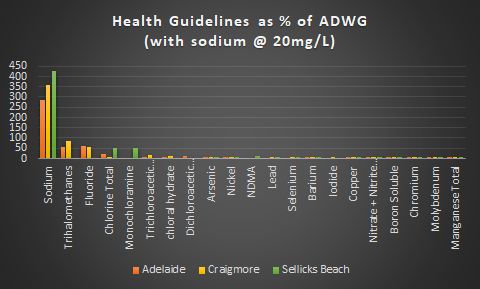
This graph includes sodium at a 'guideline' of 20mg/L. It shows that at all locations, sodium content exceeded the 20mg/L level, with the drinking water at Sellicks Beach exceeding the 20mg/L level by over 4 times. Are people suffering severe hypertension or congestive heart failure warned about drinking tap water at Sellicks Beach, Craigmore or Adelaide or elsewhere in Australia for that matter? 11.6% or 3 million Australians reported having hypertension in 2022. The problem of high sodium levels in Australian tap water is common across the country. The population of Sellicks Beach is 3000, Craigmore 11,000 and inner Adelaide 28,000. 11.6% of 42,000 people is 4,872 people. In terms of congestive heart failure 0.6% of the Australian population suffers this condition. That would equate to about 250 people in Sellicks Beach, Craigmore and inner Adelaide. Should water authorities be providing health messages in terms of sodium in drinking water and why has this issue been under reported?
Just because water in a glass appears to be clear and clean, do not assume that the water is entirely safe to consume.
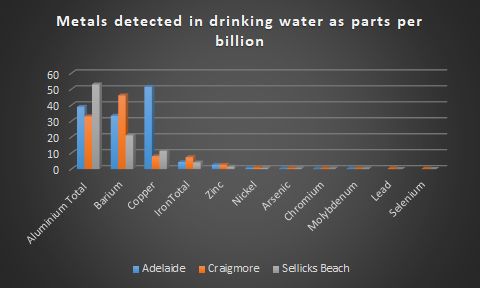
Metals detected in the drinking water. Aluminium is added during water treatment as a coagulant in order to remove turbidity, organic matter and pathogens and does not have a health guideline under the ADWG. Barium and Copper were the highest detected metals at these three locations.
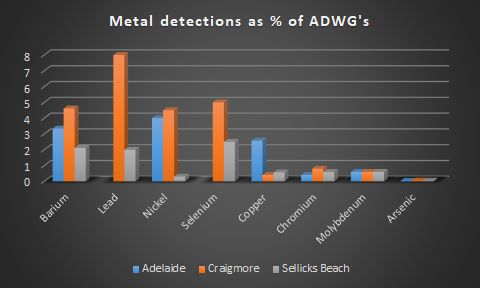
In terms of metals in relation to the Australian drinking water guidelines, lead came out the highest at Craigmore, but at just under 8% of the Australian drinking water guidelines. Some scientists claim however that there is no safe level for lead. Lead and other contaminants can enter the water supply through pipes and fixtures. It is likely that lead levels would be higher at other locations in Adelaide, Craigmore and Sellicks Beach but not at locations where the water authority did the testing. A majority of plumbing products in Australia contain between 4.5% and 6% lead.
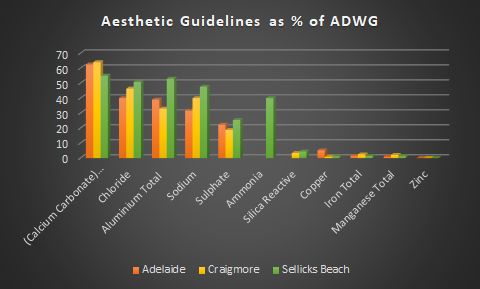
In terms of aesthetic guidelines, none of the aesthetic guidelines breached the ADWG's, with the highest levels associated with Hardness (Calcium Carbonate), Chloride, Aluminium, Sodium and Sulphate. Many locations around Australia suffer from water hardness and it can be very costly to resolve. Guideline changes for hardness have not occurred in for decades.
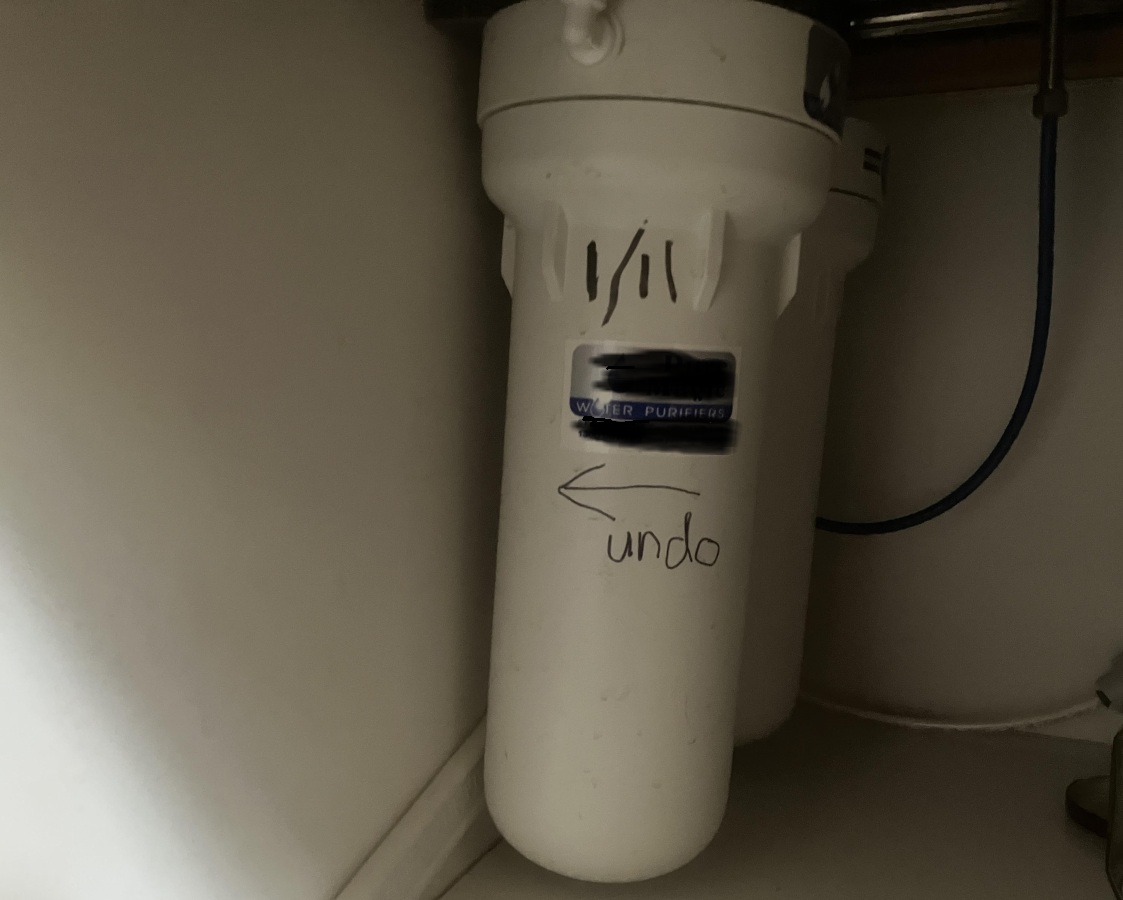
If you're concerned about sodium, lead, fluoride or disinfection byproducts in your drinking water, uncomplicated water filters can be installed under kitchen taps relatively simply. To reduce risks from pesticides or PFAS more expensive reverse osmosis systems can be installed.
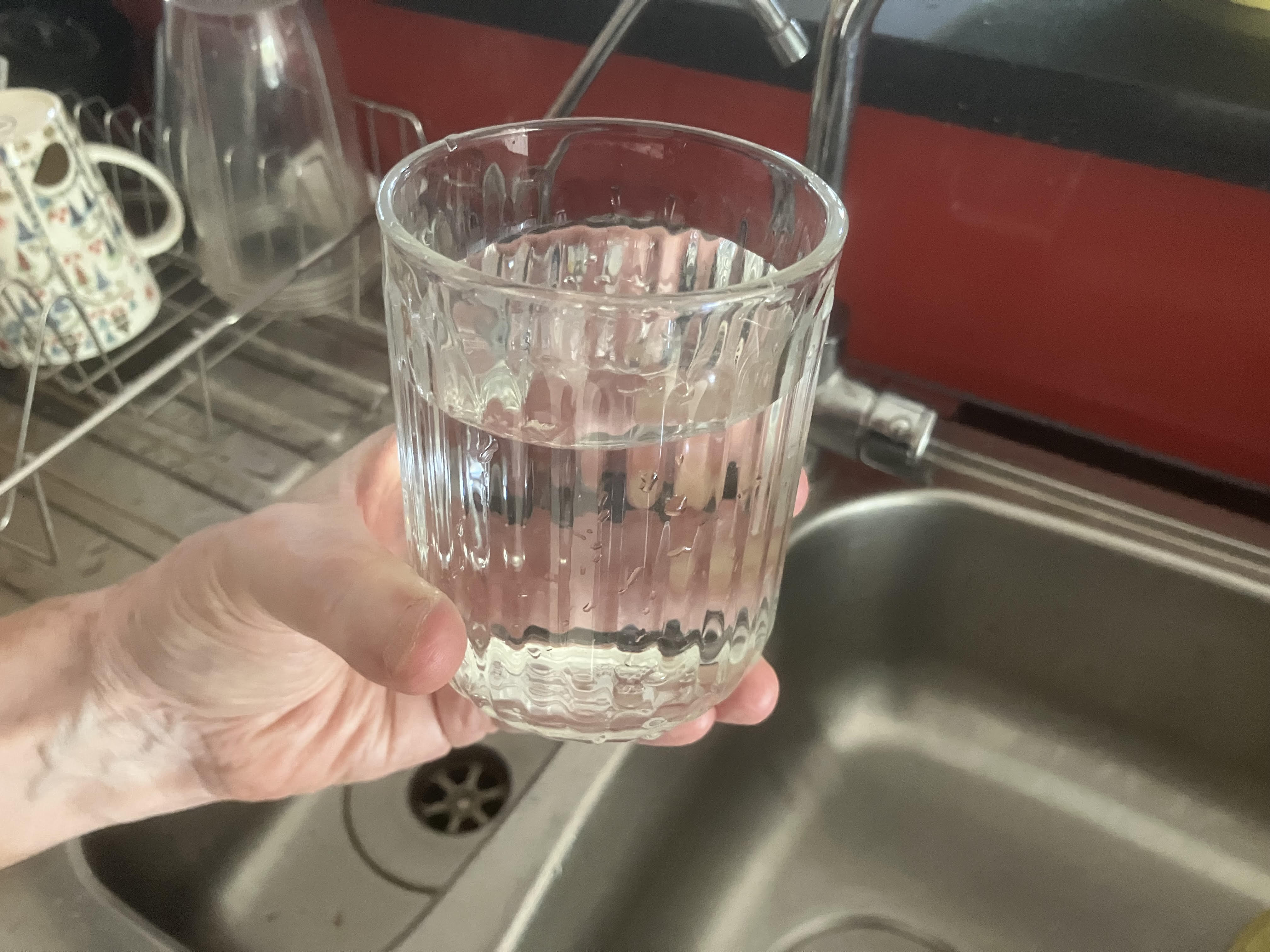
There's more to water than what you think
If you found this blog informative consider donating to our water and toxics research here