 As fire season gets underway, crews across many parts of the country have been very busy in recent weeks.
There are many things that go into effective firefighting: having adequate and well trained crews who can get on scene quickly, co-ordinated with air support, and solid logistics chains which keep the communications on track, provide the food and beds for fire crews, and the ‘public facing’ aspects of the machine, who engage with the community.
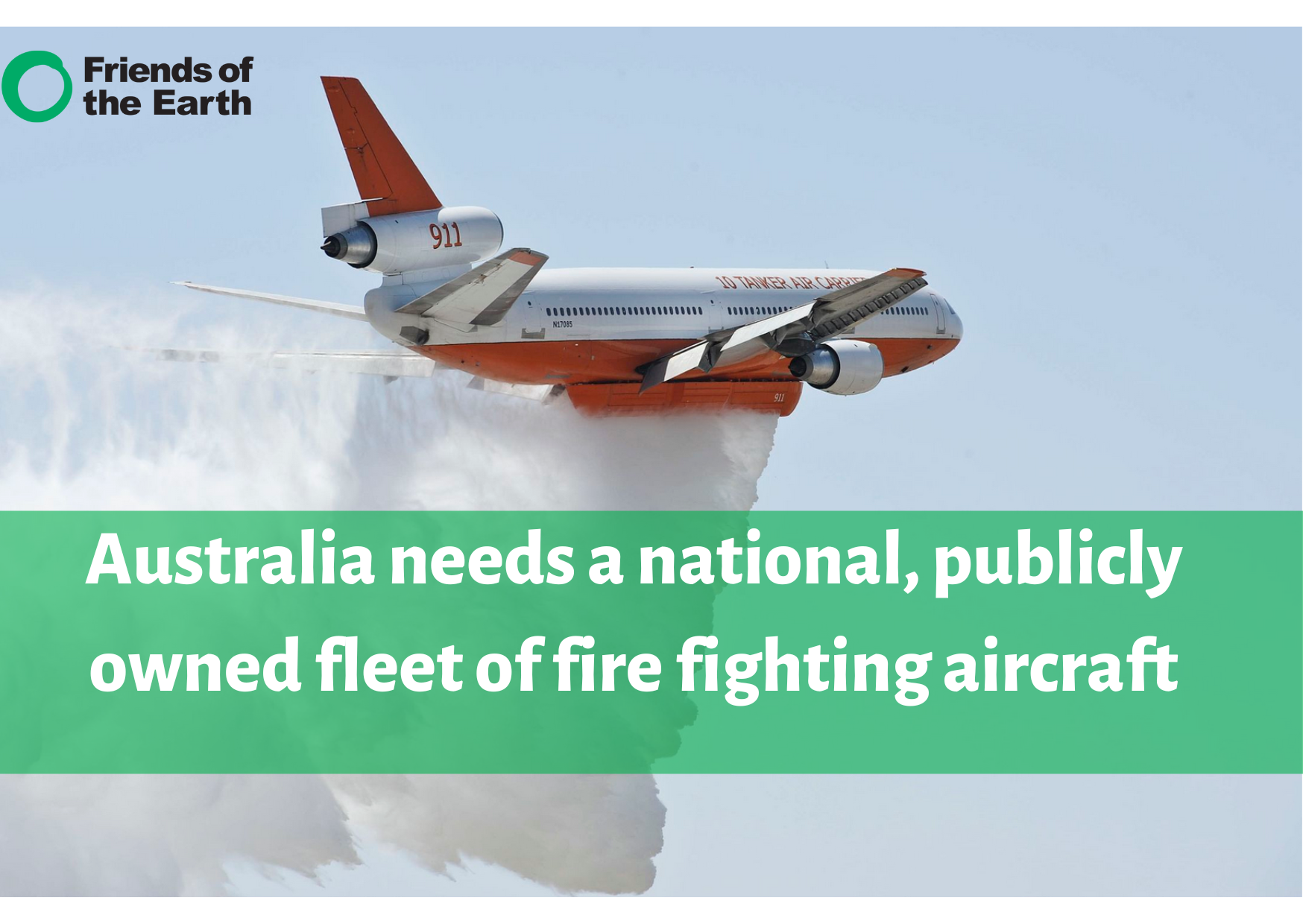
The National Aerial Firefighting Centre has 161 aircraft available across the country this summer. Among the hundreds of aircraft in the national air fleet, an especially significant group are the Large Air Tankers (LATs).
Normally Australia leases up to six LATs which are each allocated to a specific state or territory, but which are shared around the country according to greatest need. While we need up to 7 LATs in a bad fire season, we only own one (which belongs to the NSW Rural Fire Service) and we now lease one year round.
The other planes are used to fight fires in Canada or the USA, and leased in after their post season maintenance in the northern hemisphere. They all come from North America and arrive in the country during the traditional ‘shoulder’ season. Their Australian start dates are staggered across the country depending on when the local fire season normally starts. However, this shoulder is rapidly disappearing as climate change makes fire seasons longer and planes are needed for larger sections of the year in each hemisphere.
As fire seasons extend in both hemispheres, we face the risk of being unable to secure leases for LATs in coming years. Since Black Summer the situation has got worse across the northern hemisphere with places like Europe, where fire seasons have previously been a localised occurrence, becoming far more widespread.
To continue to rely on North America to lease our LATs is a very risky option. That’s why we need to heed the findings of the Royal Commission into the natural disasters of 2019/20, which recommended that Australia set up a ‘modest’ sovereign fleet of large aircraft.
Please sign our open letter to the federal Emergency Services minister, Kristy McBain, urging the federal government to get on with purchasing a publicly owned fleets of LATs.
This is set up as an open letter rather than an email action to reduce the messages her office receives during fire season. It will be posted to her office on January 10, 2026.
Image: By Tech. Sgt. Joselito Aribuabo - https://www.dvidshub.net/image/584330, Public Domain, https://commons.wikimedia.org/w/index.php?curid=39573336
The Hon Kristy McBain
Minister for Emergency Management
Dear Minister
I appreciate that your government provides support for the national fire fighting fleet.
For instance, the Australian government funded $100 million over 2024-25 to support the National Aerial Firefighting Centre (NAFC) fleet. This funds the minimum costs of five national aircraft that are dispatched under the protocols facilitated by the National Resource Sharing Centre. This collaboration allows the Chiefs and Commissioners nationally to decide where these national aircraft can be placed so that they can be mobilised easily to the state or territory that has the greatest need. This helps to keep Australians safe in bad fire seasons.
As you know, an important component of the fleet are the Large Air Tankers (LATs) which can be utilised for both initial attack and retardant line building to support ground crews.
Australia generally needs 6 or 7 LATs in the country each summer. We only own one (which belongs to the NSW Rural Fire Service) and we now lease one year round. That means we must secure four to five each season through leasing arrangements.
The Royal Commission into the natural disasters of 2019/20 recommended that Australia set up a ‘modest’ sovereign fleet of large aircraft.
We need a publicly owned fleet of planes and aircraft suitable for effectively fighting the fires we will continue to see in a warming world. As fire seasons get longer in the northern hemisphere there is ever greater demand on the limited number of LATs that are available. And with wild fire becoming more common across much of Europe, the situation will become even more complex.
We should buy the LATs, not just lease them from an increasingly complex and busy international market.
I urge the federal government to establish a publicly owned fleet of Large Air Tankers. This will help ‘future proof’ our fire fighting capacity by ensuring we have access to these aircraft when needed, even in a warming world.
How would we pay for it?
The Australia Institute is proposing a National Climate Disaster Fund, funded by a levy of $1 per tonne of all coal gas and oil produced in Australia to help pay for some of the increasing costs of these climate disasters.
A $1 levy on fossil fuel production in Australia would currently raise around $1.5 billion a year for the National Climate Disaster Fund. While the Institute suggests the money generated could be allocated to sectors and communities which are affected by climate change, like First Nations and farmers, some of it could also be allocated to fire fighting capacity, including planes.
I urge you to do everything in your power to ensure that Australia starts buying additional LATs until we have a publicly owned fleet of at least 6 aircraft.
yours sincerely,