A new report looking at PFAS and Pesticide detections in Victorian water supply catchments over the past decade has just been completed by Friends of the Earth.
The data was gained through 16 separate Freedom of Information requests sent to Victorian Drinking Water Authorities between late 2024 and early 2026.
This report is an update on a similar undertaking published almost ten years ago regarding pesticide detections in Victorian drinking water supplies.
A full copy of the report is available from [email protected]
Donations are required for release of full report to cover costs associated with compiling report
A summary document can be found here.
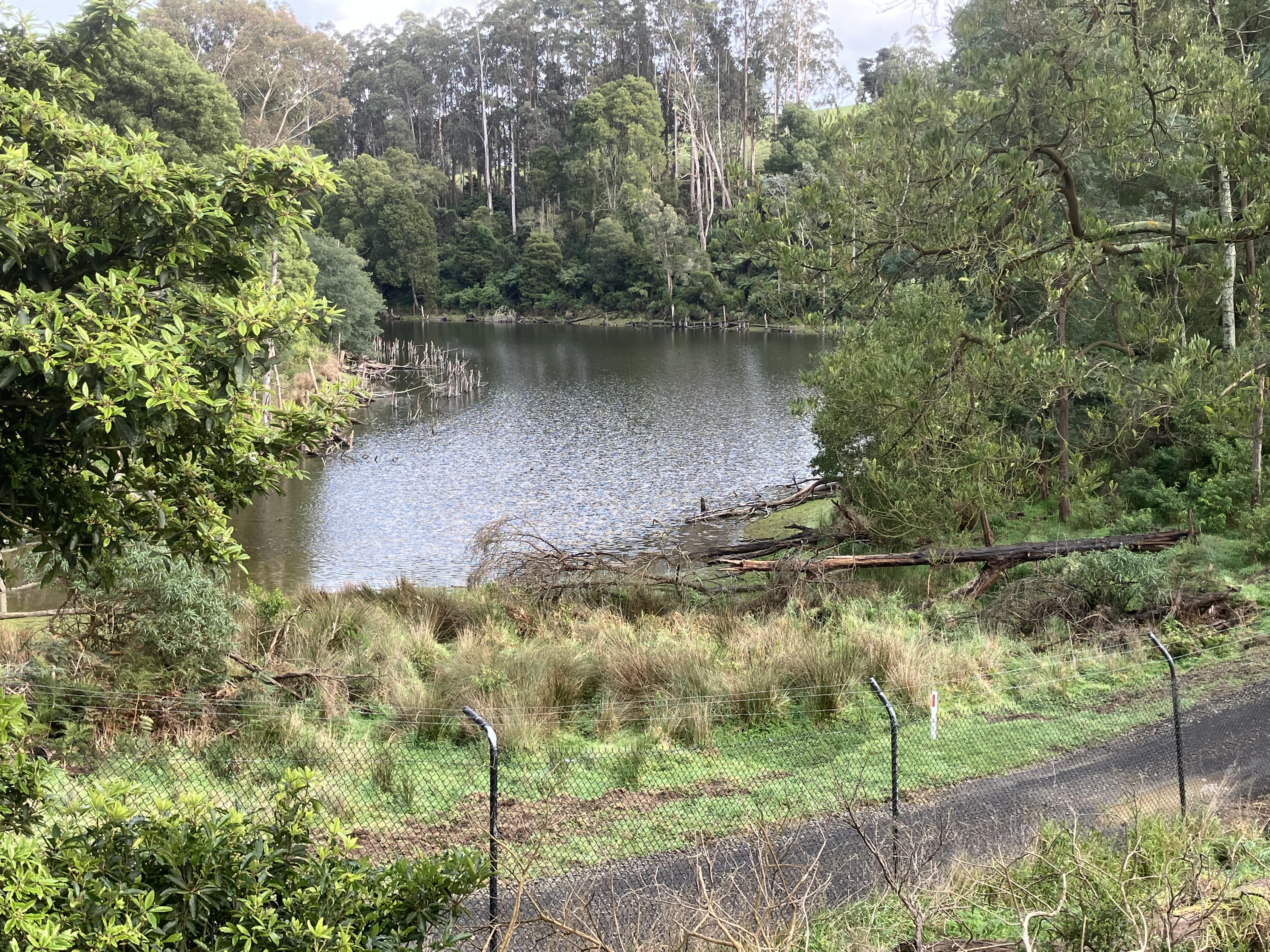
Tarago Reservoir which supplies Neerim South and south east Melbourne with drinking water. It is also a supplementary supply for Warragul, Drouin and Rokeby. In October 2024 the organophosphate insecticides Chlorpyrifos and Diazinon were detected 580 times over the 99% ecological Default Guideline Value in Neerim South raw water.
Key findings of the report include:
In regards to the Australian Drinking Water Guidelines, there were 16 breaches to the 2025 PFAS guidelines (12 for PFOS and 3 for PFHxS) and one for pesticides.
Breaches to Australian Drinking Water Guidelines |
||
Amitrole 1 |
PFOS 12 |
PFHxS 3 |
44 different pesticides were detected from 1726 positive samples. The most frequently detected pesticides were Atrazine, Simazine, 2,4-D, Triclopyr and MCPA.
21 different PFAS chemicals were detected from 138 positive samples. The most frequently detected PFAS chemicals were PFOS, PFPeA, PFHxS, 6:2 FTS and PFHpA.
Pesticides were detected 12.5 times more often than PFAS chemicals, but breaches to the drinking water guidelines occurred 15 more times with PFAS chemicals than pesticides.
Testing of treated water for pesticides and PFAS was limited to a handful of locations, with almost all testing occurring in raw water only.
The highest PFAS detections breaching health guidelines were recorded at Lake Mulwala in July 2023, with the only pesticide breach concerning Amitrole in October 2024 at Bellbridge.
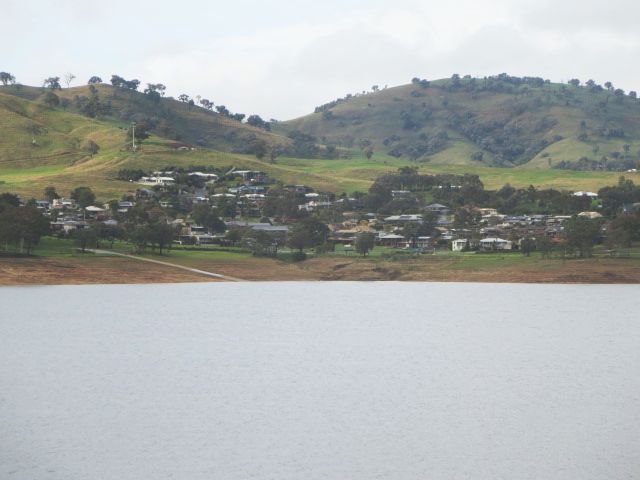
Bellbridge (population 400) located on the Victorian side of Lake Hume recorded the only breach to the Australian Drinking Water Guidelines, due to the herbicide Amitrole in 2024.
The highest pesticide detections in terms of ecological guidelines were one detection of Chlorpyrifos and Diazinon at Neerim South WTP in October 2024. Both chemicals combined were detected at 580 times higher than the 99% ecological default guideline values (DGV’s).
In terms of average pesticide detections over the decade, all were well under Australian Drinking Water Guidelines, but nine locations exceeded the ANZECC ecological 99% DGV’s.
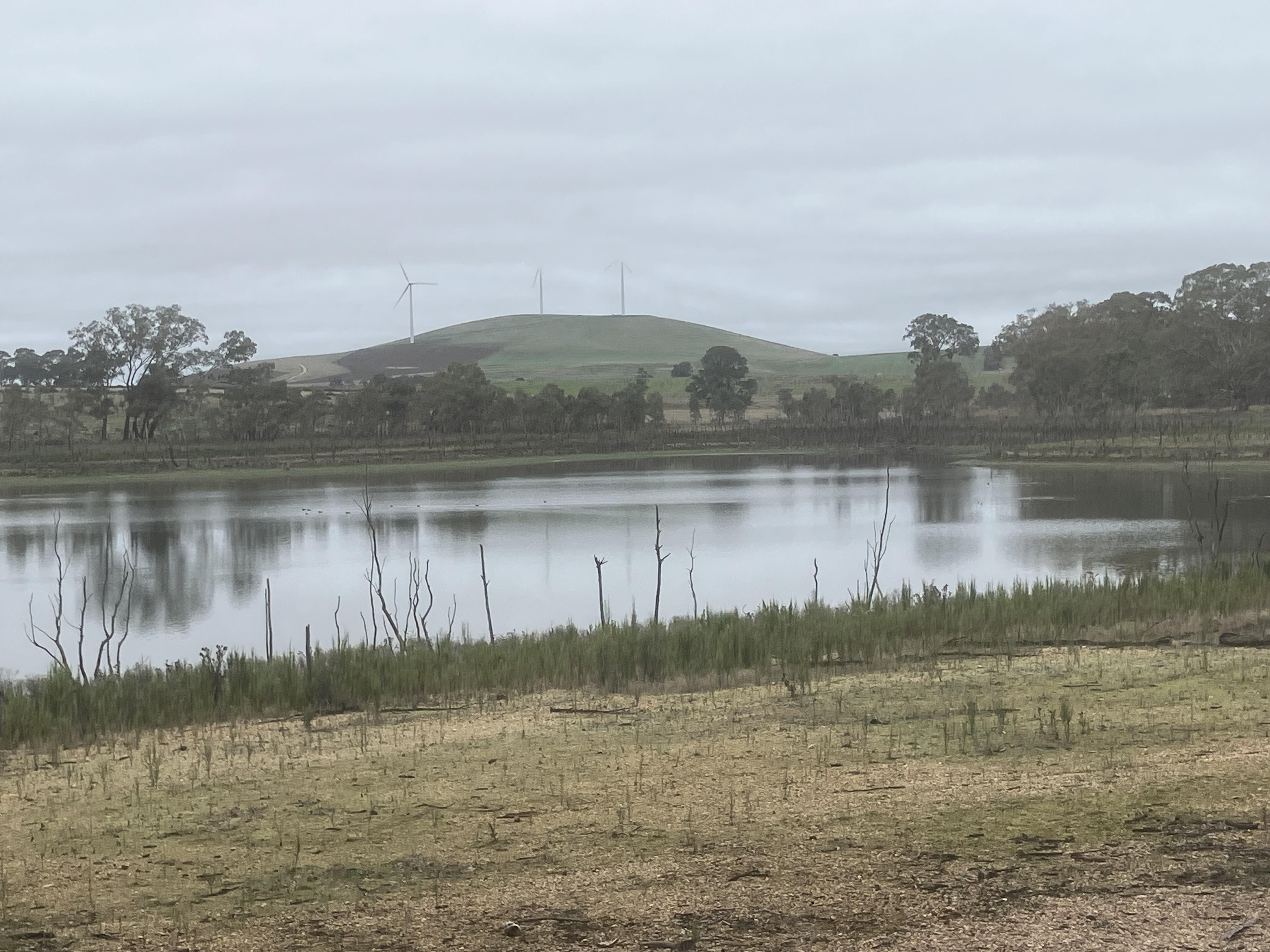
Talbot Reservoir (located 40km north of Ballarat), takes the dubious award of being the water supply in Victoria most impacted by pesticides, mainly due to detections of the herbicide Metolachlor.
In terms of 99% DGV’s, there were 112 pesticide breaches (with the herbicide Metolachlor making up 98.2% of that total) and three breaches for PFOS. Metolachlor breached this guideline whenever it was detected.
Breaches to ANZECC 99% Ecological Default Guidelines |
|||
Diazinon 1 |
Chlorpyrifos 1 |
Metolachlor 110 |
PFOS 3 |
In regards to the 2025 PFOS Biota Screening Threshold (BST) there were 60 breaches, including 9 on the Moorabool River, 4 at Djerriwarrh Reservoir and 21 along a 250km stretch of the Murray River. 92% of all PFOS detections breached the PFOS BST.
Total pesticides detected over the decade increased by 179% from 2007-2016 time period. Major increases occurred in regards to detections of Benomyl, Metolachlor and Terbuthylazine.
PFAS chemicals were detected in 37 water supplies, with pesticides detected in 139 water supplies.
The most PFAS detections were detected at Moorabool Water Treatment Plant/Raw Water (13), Lake Mulwala (11), Djerriwarrh Reservoir (10), Sale Raw/Reticulation (8), Briagalong Raw/Reticulation (7) and Seaspray Raw/Reticulation (7).
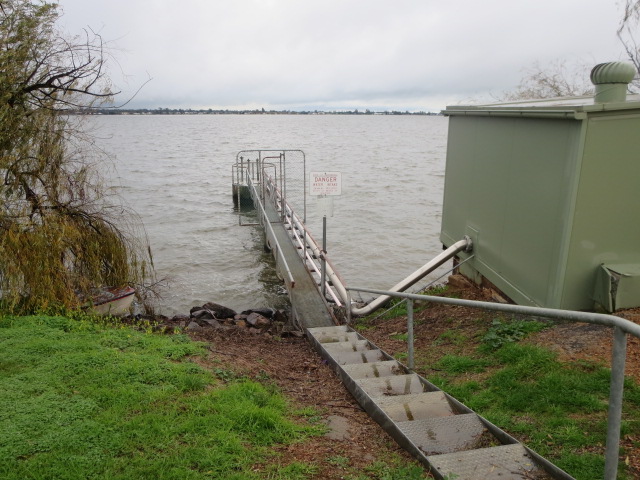
Victoria's worst PFAS incident occurred at Lake Mulwala (Yarrawonga) in July 2023. The source of the pollution was never investigated.
The most pesticide detections were detected at Yering Gorge Yarra River (155), Tullaroop Reservoir (87), Quambatook (81), Freeburgh Storage Bright (63), Evansford Reservoir (58), Centenary Reservoir (53) and Wahgunyah (51).
82% of detected pesticides did not have a 99% Ecological DGV with 95% of detected PFAS chemicals not having a 99% DGV. Of the pesticides the most glaring examples of lack of ecological guidelines are Triclopyr, Benomyl, Terbuthylazine and Hexazinone.
89% of detected PFAS chemicals do not have a drinking water guideline or ecological guideline. The health and ecological impact of these detections is therefore understated.
PFAS chemicals appear to be more serious in terms of breaching health guidelines, whereas pesticides, particularly Metolachlor are more serious in terms of ecological concerns.
16 different water supplies recorded averaged PFAS levels that exceeded ANZECC’s Biota Screening Threshold, with 9 different water supplies breaching 99% ANZECC Default Guideline Values. This indicates chronic PFAS and pesticide in those water supplies.
A number of pesticides and PFAS chemicals are endocrine disruptors. It is unclear how drinking water guidelines and ANZECC guidelines incorporate risks associated with endocrine disrupting chemicals.
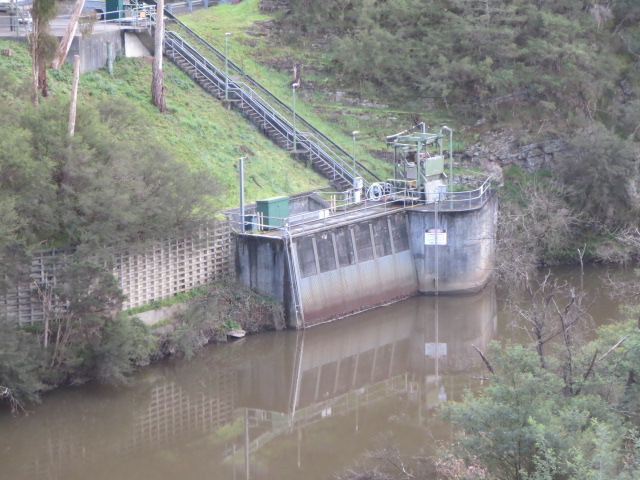
The Yarra River at Yering Gorge, where drinking water is pumped into Sugarloaf reservoir recorded the highest number of pesticide detections over the decade.
Key endocrine disrupting chemicals include: PFAS chemicals, Atrazine, Simazine 2,4-D, Benomyl, Chlorpyrifos, Diazinon, Diuron, Glyphosate, Metolachlor, and Tebuconazole. Approximately two thirds of pesticides detected by Victorian water authorities could be regarded as being endocrine disruptors.
PFAS sampling by most water authorities use a Level of Detection (LOD) which is higher than best practice, meaning that most PFAS detections are probably not being detected. Eg Sydney Water have a LOD of 0.0001µg/L, twenty times less that the LOD used by almost all water authorities in Victoria (except Gippsland Water and Lower Murray Water).
Breaches to ANZECC PFOS Biota Screening Threshold |
PFOS 60 |
The most problematic water supplies in terms of ecological impacts were: Talbot Reservoir, Lake Mulwala, Neerim South Water Treatment Plant, Evansford Reservoir, Moorabool River, Tullaroop Reservoir, Djerriwarrh Reservoir, Goulburn Weir, Stony Creek Reservoir, Taylors Lake, Moorabool Water Treatment Plant, Centenary Reservoir, Yarra River at Yering Gorge and Boort Service Basin.
Donations to help keep us doing this work are crucial to help us keep doing this work.