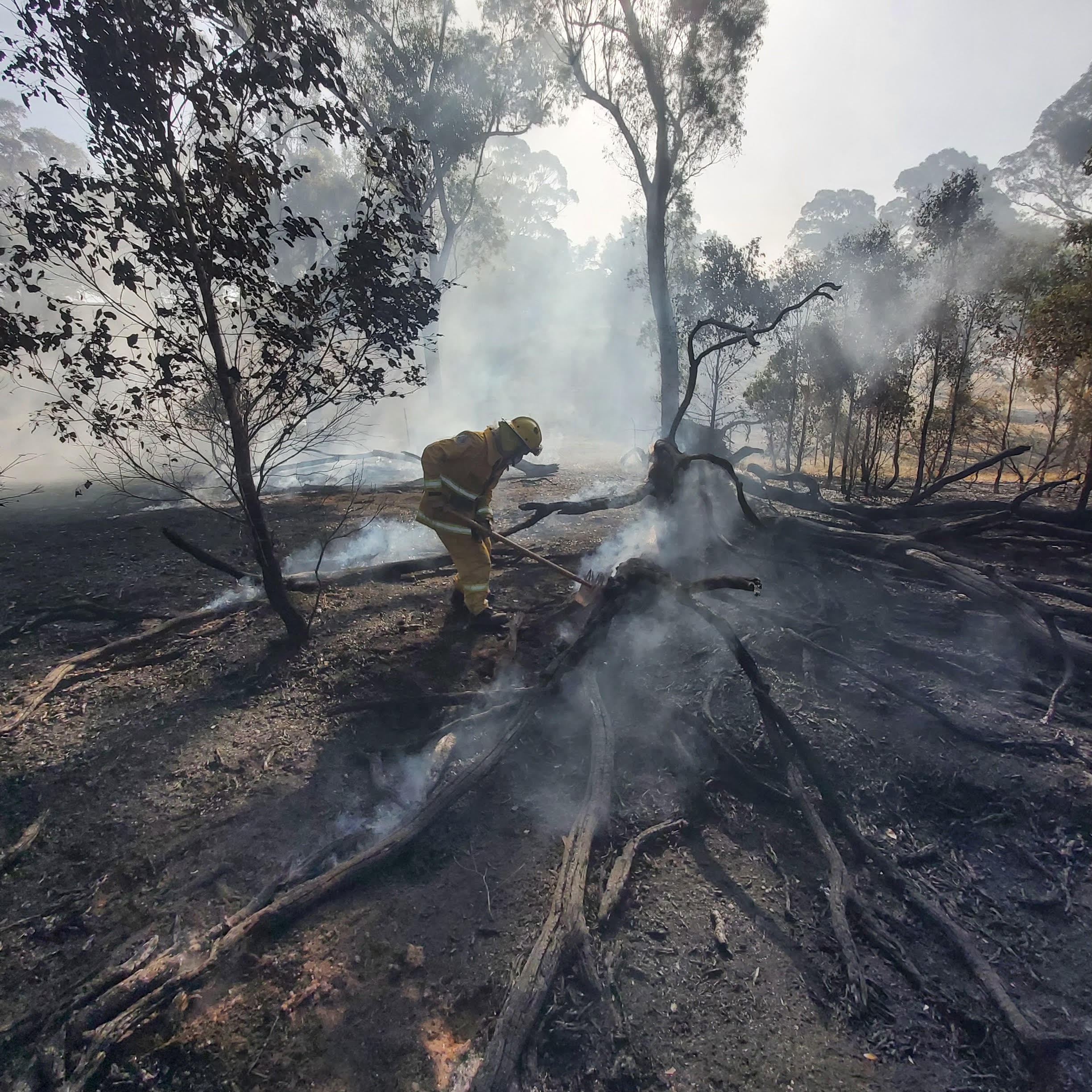
 As fire season gets underway, crews across many parts of the country have been very busy in recent weeks.
There are many things that go into effective firefighting: having adequate and well trained crews who can get on scene quickly, co-ordinated with air support, and solid logistics chains which keep the communications on track, provide the food and beds for fire crews, and the ‘public facing’ aspects of the machine, who engage with the community.
Apart from dealing with this summer's fires, we need to be preparing for future seasons. Check below to find out about our proposals for building Australia’s ability to respond to wild fire as fire seasons get longer and more intense.
National response
The following are some of our ideas on how Australia and Victoria in particular should be preparing for the longer fire seasons that are already happening as a result of global heating.
Building our Air Fleet
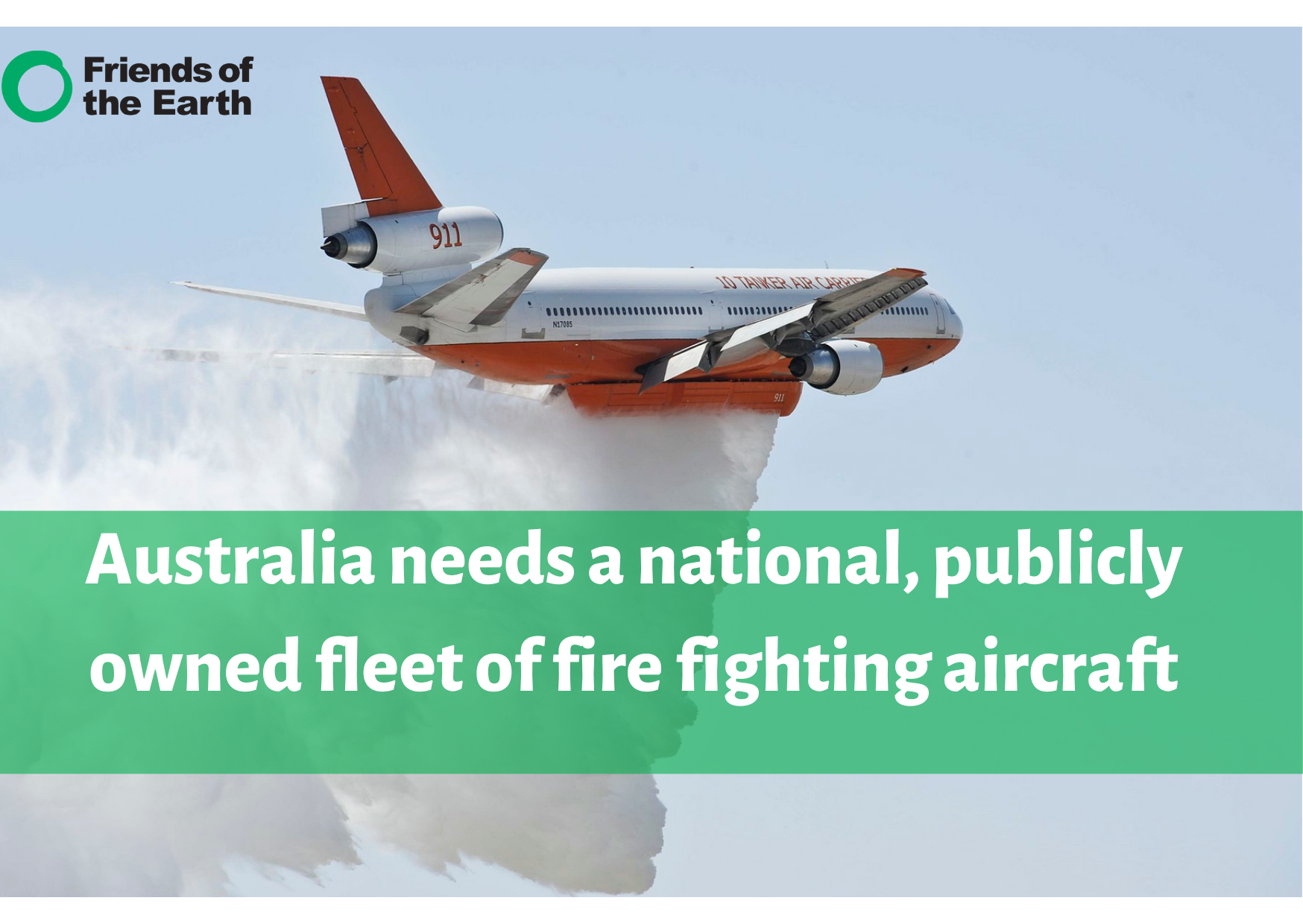
The National Aerial Firefighting Centre has 161 aircraft available across the country this summer. Among the hundreds of aircraft in the national air fleet, an especially significant group are the Large Air Tankers (LATs).
Normally Australia leases up to six LATs which are each allocated to a specific state or territory, but which are shared around the country according to greatest need. While we need up to 7 LATs in a bad fire season, we only own one (which belongs to the NSW Rural Fire Service) and we now lease one year round.
The other planes are used to fight fires in Canada or the USA, and leased in after their post season maintenance in the northern hemisphere. They all come from North America and arrive in the country during the traditional ‘shoulder’ season (our spring). Their Australian start dates are staggered across the country depending on when the local fire season normally starts. However, this shoulder is rapidly shrinking as climate change makes fire seasons longer and planes are needed for larger sections of the year in each hemisphere.
As fire seasons extend in both hemispheres, we face the risk of being unable to secure leases for LATs in coming years. Since Black Summer, the situation has got worse across the northern hemisphere with places like Europe, where fire seasons have previously been a localised occurrence, becoming far more widespread.
To continue to rely on North America to lease our LATs is a very risky strategy. That’s why we need to heed the findings of the Royal Commission into the natural disasters of 2019/20, which recommended that Australia set up a ‘modest’ sovereign fleet of large aircraft.
Find out more
You can read more about why we need additional aircraft for firefighting here.
Take action
Please sign our open letter to the federal Emergency Services minister, Kristy McBain, urging the federal government to get on with purchasing a publicly owned fleets of LATs. This is set up as an open letter rather than an email action so reduce the messages her office receives during fire season. It will be posted to her office on January 10, 2026.
A national remote area firefighting team.
As fire threatens World Heritage Areas and national parks across the country, it is time to establish a national remote area firefighting team, which would be tasked with supporting existing crews in the states and territories.
Long fire seasons stretch local resources, and sometimes remote areas need to be abandoned in order to focus on defending human assets. Having an additional, mobile national team of career firefighters that could be deployed quickly to areas of greatest need would help us protect the wonderful legacy of national parks and World Heritage Areas across the country.
This was recommended by a Senate inquiry after the devastating fires in Tasmania of 2016.
Building our fire fighting capacity in Victoria
Maintain and support our career firefighters
With fire seasons getting longer due to climate change, there are many things we need to do to respond effectively to more intense seasons, such as
- continuing to expand the overall number of professional firefighters in FFMV (both permanent and seasonal firefighters, and additional remote area and rappel teams),
- continuing to invest in aircraft and ensuring adequate numbers of aircraft are located near remote areas and large national parks in the east and west
- maintaining staffed fire towers and investing in early warning systems,
- we must continue to support volunteer crews through the CFA with equipment and training and consider how we make volunteering sustainable through long and exhausting summers.
We should consider the proposal to establish a national ‘semi professional’ firefighting force to be deployed locally as needed, as has been suggested by the federal Emergency Services minister Murray Watt and the recommendation from a senate inquiry into the 2016 fires in Tasmania for a national remote area firefighting team.
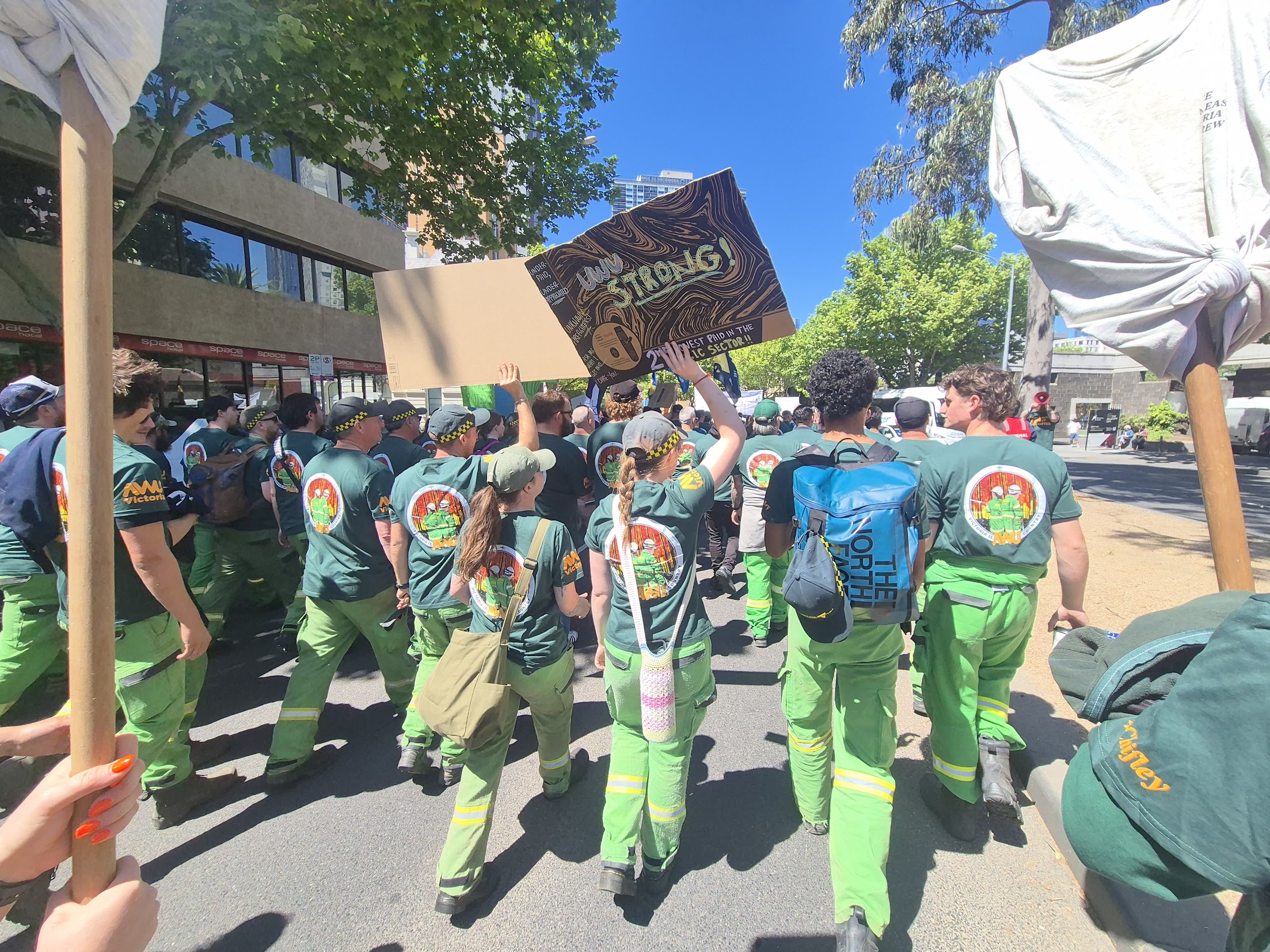
In the short term it is essential that the Victorian government work with the union to resolve the current industrial dispute with FFMV firefighters.
The long running dispute with fire fighting staff continues. Fire fighters with Forest Fire Management Victoria (FFMV) are some of the lowest paid public servants, and according to the Australian Workers’ Union, women on FFMV crews are being paid thousands of dollars less than their male colleagues. Firefighters are demanding better wages and conditions.
Take action
Please sign our letter to the Victorian Premier and state environment minister urging them to resolve the dispute as a matter of urgency (it also demands no further jobs cuts to staff in DEECA).

Create opportunities for urban people to volunteer as remote area firefighters
Existing volunteer services rely on attracting members who live close to fire stations so they can respond quickly. This means that the vast majority of Australian citizens cannot become volunteer firefighters. We propose that new remote area volunteer teams be established which could focus on attracting and training younger people in major cities and regional centres who could then nominate for deployment in major campaign fires.
Given the fact that many regional volunteer brigades are aging, this would bring considerable new capacity into volunteer brigades at a very low cost (Tasmania recently established a volunteer remote area firefighting team at a cost of $2.3 million, which was used to support the TFS with management, training and equipment to develop its volunteer and career remote firefighting capability. As a result they now have 140 trained remote area firefighters).
But don’t we already have paid firefighters who do this work?
Yes, in Victoria we have career firefighters employed by the state government. Forest Fire Management Victoria (FFMV) have firefighters trained in dry firefighting, plus crews who can be transported to a fire ground via helicopter (the rappel teams). These teams do a splendid job of stopping many small fires before they turn into massive blazes. But sometimes there are simply not enough firefighters compared with the number of fires. And with climate change making fire seasons longer and more intense, we will need to continue to invest in additional firefighting capacity. This volunteer team would work along side FFMV crews and supplement their work, not replace them.
This proposal is for people to be trained in remote/ arduous firefighting. It is not proposing training volunteers to the level of rappel team qualifications.
This proposal is intended to build capacity for early response to fires. We fully support the existing FFMV workforce and see this proposal as being complementary to the efforts of FFMV crews, which must be maintained.